



Almost everyone assumes the business world pauses completely between mid-December and New Year’s.
And sure, that is partially true. Nobody is likely to sign a massive contract on Christmas Eve. If you sell high-end services, you are inevitably going to feel a slowdown. Data from Software Oasis confirms why: the stakes are simply too high to decide quickly during a fragmented month.
To put this in perspective, here are average referral values across key industries:
- Healthcare: $86,750
- Tech & SaaS: $64,500
- Financial Services: $92,300+
When that much money is on the line, you fall into the “complex decision” category. But here is the mistake most executives make: They think that because signing deals slows, decision-making stops.
It doesn’t. It just looks different. While the “Closing Deals” window slows down, the “Relationship Building” window opens wide.
Here is exactly what is happening in December, and how you can pivot to take advantage of it.
The Contraction: Why Deals Die in December
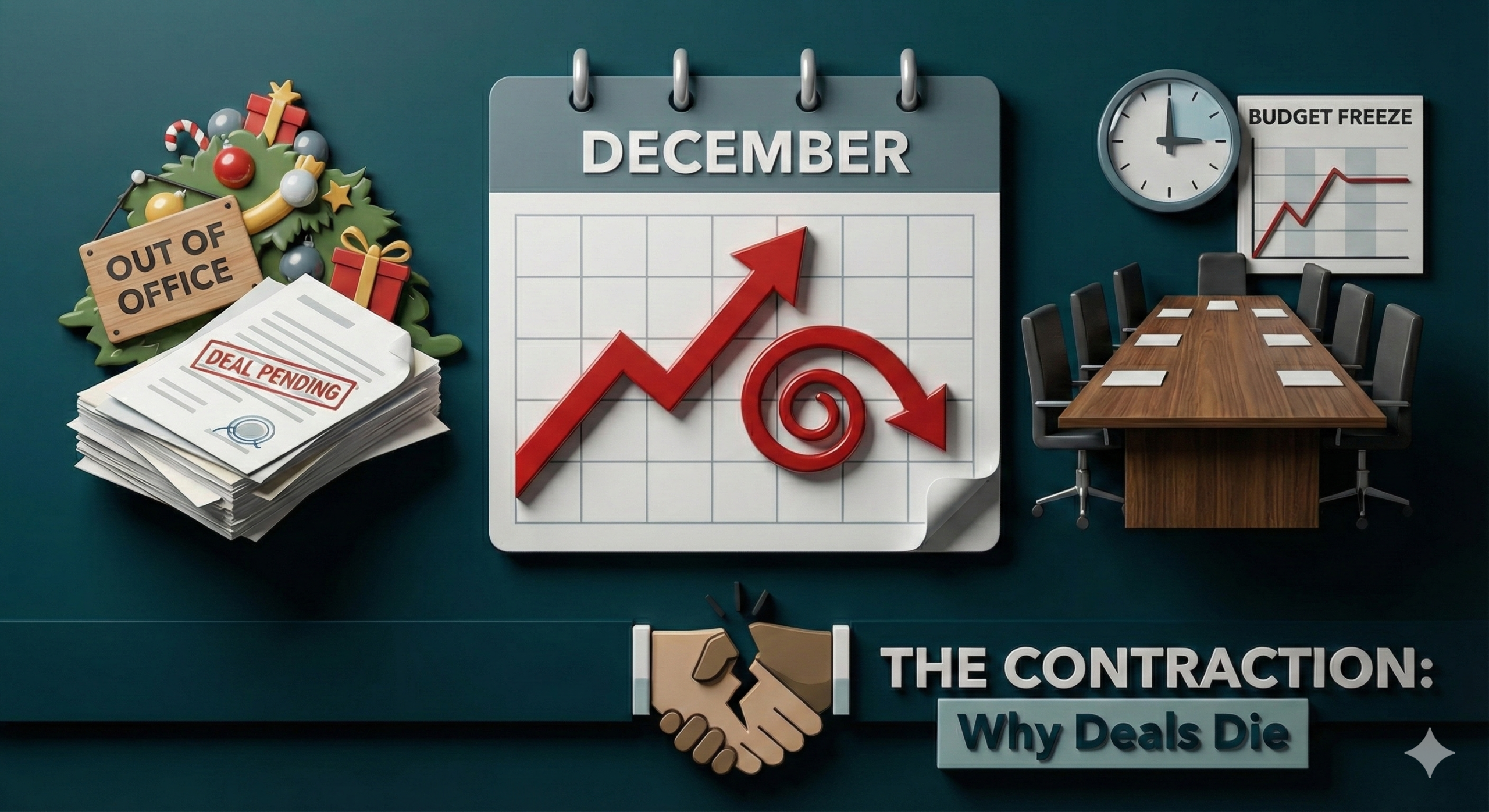
The reason big deals stall in December isn’t because people are lazy. It’s a math problem.
The “Too Many Cooks” Factor
To get a B2B deal signed today, Webolutions notes that you usually need 6 to 10 different decision-makers to agree. This creates a “Consensus Trap.” If just one of those key executive approvers is skiing in Aspen or visiting family, the whole deal freezes.
The Hard Stop Date
The drop-off is sharp and predictable. Somebody Digital reports that demand and engagement drop by 60% after December 20th.
The Takeaway: Stop trying to force a signature after the 20th. It is an inefficient use of resources, and you risk annoying your prospects.
The Expansion: Where You Must Pivot
 Since you can’t close the big deal, flip the script.
When transactional sales slow, C-suite focus pivots to internal strategy. They are clearing their desks, auditing vendor performance, and worrying about the upcoming fiscal year. This is your opportunity to stop being a “vendor” and start being a strategic partner.
Focus on Old Friends (The CLV Imperative)
It’s tempting to hunt for new business, but keep your current clients happy first. Bay Creative highlights research confirming that improving retention by just 5% can boost your profits by 25–95%. Use this quiet time to send them helpful data or insights, rather than sales pitches.
Target the “Leftover” Money
A lot of companies have a “use-it-or-lose-it” budget. They have operational dollars they have to spend before December 31st. They likely won’t sign a massive contract, but they might agree to a smaller $10k or $30k “Audit” or “Strategy Plan.” Pitch that to help them get ready for Q1.
Secure the Future Pipeline
Since executives are already in “planning mode” for January, align with that mindset. Ask for a meeting in mid-January. They are much more likely to say “yes” to a future date than a meeting tomorrow.
The Bottom Line
If you stop communicating now, you lose the opportunity to be the trusted partner on their shortlist.
Don’t ghost them. Just change the conversation. You can slow down asking for their signature today and start helping them plan for tomorrow.
Need help planning your Q1 Strategy?

Don’t wait until January to fill your pipeline. Book a Strategy Call today to set up your 2026 roadmap.